5 Floral Bouquets for Modern Design
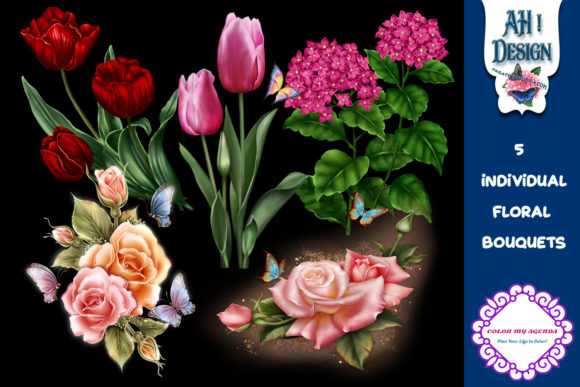
Elevating a visual project often requires more than just standard stock photography; it demands assets that blend organic beauty with technical precision. When designers integrate 5 Floral Bouquets featuring a lovely assortment of flowers, including tulips, roses, butterflies, and sparkly lights, they gain access to versatile elements that can transform flat layouts into immersive experiences. These high-resolution resources are not merely decorative backgrounds but functional components of modern graphic design, offering the clarity needed for large-format print and the adaptability required for digital interfaces.
The Role of High-Resolution Assets in Visual Communication
In professional creative workflows, resolution dictates usability. Assets ranging from 2500 to 3600 pixels at 300 dpi provide the necessary headroom for scaling without pixelation. This technical specification is crucial for maintaining brand integrity across different mediums. Whether you are designing a billboard or an Instagram story, the crispness of individual petals and the subtle glow of integrated lighting ensure that your visual hierarchy remains intact. High-quality imagery signals professionalism and attention to detail, directly influencing how audiences perceive brand identity and product value.
The inclusion of diverse botanical elements like tulips and roses allows for nuanced color palette development. Unlike solid colors, floral textures introduce natural gradients and organic shapes that soften rigid UI designs or add warmth to corporate branding. The addition of whimsical elements such as butterflies and sparkly lights introduces movement and focal points, guiding the viewer’s eye through editorial layouts or packaging designs with intention rather than accident.
Practical Applications Across Design Disciplines
Versatility is the hallmark of effective creative assets. A collection of five distinct arrangements offers enough variety to create cohesive campaigns without becoming repetitive. Designers can leverage these bouquets in numerous contexts:
- Branding and Packaging: Use individual blooms as secondary logo marks or pattern elements on product labels to convey freshness and luxury.
- Social Media Graphics: Create engaging templates where text overlays sit comfortably within negative space created by the bouquet composition.
- Web and UI Design: Implement soft-focus versions as hero section backgrounds to reduce cognitive load while maintaining aesthetic appeal.
- Editorial and Print: Utilize full-resolution files for magazine spreads, wedding invitations, or event signage where tactile detail matters.
- Digital Products: Incorporate arrangements into planner stickers, digital scrapbooking kits, or presentation themes for added value.
Strategic Integration and Composition Tips
Simply placing a flower image on a canvas does not guarantee good design. Thoughtful integration requires considering how the asset interacts with typography and other visual elements. When working with complex imagery involving sparkly lights or intricate petal details, ensure sufficient contrast for readability. Text should never compete with the busiest part of the arrangement; instead, use the natural flow of the stems and leaves to frame copy or highlight calls to action.
Consistency in visual style strengthens user experience and brand recognition. If you choose a specific lighting mood or color grade from the assortment, carry that aesthetic through all touchpoints. For example, if the sparkly lights suggest a festive evening theme, pair them with elegant serif typography and deep, rich background colors. Conversely, bright tulips and butterflies might call for clean sans-serif fonts and ample white space to maintain a modern, airy feel. Always evaluate assets based on their ability to support your communication goals rather than just their standalone beauty.
Scalability also extends to file management and workflow efficiency. Having five individual arrangements allows designers to mix and match elements for custom clusters, creating unique compositions tailored to specific aspect ratios. This modularity saves time during the production phase while ensuring that every output feels bespoke. By treating these floral assets as foundational building blocks rather than afterthoughts, creators can achieve a polished, professional presentation that resonates emotionally with viewers while meeting rigorous technical standards.
Ultimately, the success of any design project hinges on the quality of its components and the intention behind their use. Investing in premium, high-resolution resources ensures that your work stands up to scrutiny across both digital screens and physical prints. By thoughtfully selecting and arranging botanical elements, designers can craft visuals that are not only aesthetically pleasing but also strategically effective in conveying message, mood, and brand values.