Evaluating Floral Artwork - White Peony in 4 Sizes for Home Decor
Selecting wall art involves balancing aesthetic preference with technical feasibility. When considering digital downloads, specifically Floral Artwork - White Peony in 4 Sizes, the decision extends beyond the visual appeal of the flower itself. It requires an understanding of file specifications, printing logistics, and how this specific botanical illustration integrates into various interior design schemes. This particular piece, featuring the Paeonia Miss America cultivar against a dark watercolor background, occupies a distinct niche between traditional botanical prints and modern moody decor. Understanding its specific attributes helps determine if it is the correct resource for your current project or if an alternative format would better serve your needs.
Visual Characteristics and Stylistic Fit
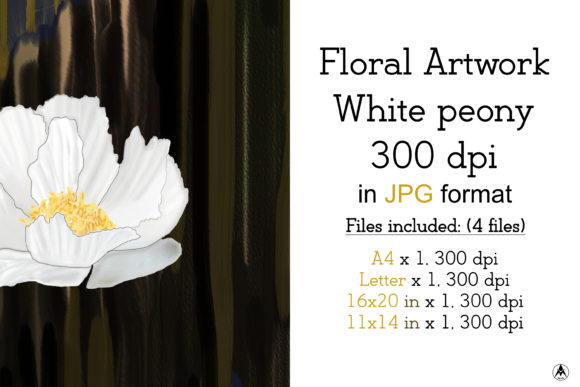
The defining feature of this artwork is the high contrast between the luminous white petals of the Miss America peony and the deep, textured watercolor background. Unlike standard botanical illustrations that utilize white or cream backgrounds to emphasize scientific accuracy, this piece uses negative space to create drama and focus. This stylistic choice significantly influences where and how the art should be displayed.
In comparison to lighter floral prints, this dark-background aesthetic offers superior versatility in rooms with variable lighting conditions. Lighter prints can sometimes wash out in sun-drenched spaces or appear sterile in dimly lit areas. The dark ground of this White Peony artwork anchors the image, making it suitable for creating focal points in bedrooms, dining areas, or studies where a sense of calm or sophistication is desired. However, this same characteristic presents a tradeoff: it demands more intentional framing choices. While a white peony on a white background allows for frameless mounting or minimal white matting, the dark edges of this JPG file typically require a mat border to prevent the image from feeling visually heavy or "boxed in" against a light wall.
Botanical Accuracy vs. Artistic Interpretation
For enthusiasts evaluating resources based on horticultural accuracy, it is important to distinguish between scientific illustration and decorative floral art. The Paeonia Miss America is a real cultivar known for its large, single-to-semi-double white blooms and golden stamens. This artwork captures those identifying features but renders them through an artistic lens rather than a clinical one. If your primary goal is educational reference or strict botanical documentation, a vintage lithograph or field guide scan may be more appropriate. However, for interior decoration where mood and composition take precedence over taxonomic precision, this stylized approach provides a more cohesive look for contemporary interiors.
Technical Specifications and Format Limitations
A critical factor in evaluating any digital art purchase is the file format and resolution. Floral Artwork - White Peony in 4 Sizes is provided exclusively in JPG format at 300 DPI. Understanding what this means practically is essential for avoiding disappointment during the printing phase.
The Implications of JPG-Only Delivery
Many professional print shops and designers prefer TIFF or PNG files because they are lossless formats. JPG is a compressed format, which means some data is discarded to reduce file size. At 300 DPI (dots per inch), the compression artifacts in these files are generally negligible for home printing and standard commercial lab prints up to 16x20 inches. The human eye typically cannot discern compression issues at this resolution when viewed at a normal distance.
However, there are limitations to consider when comparing this product to higher-end vector or RAW alternatives:
- No Transparency: JPGs do not support transparent backgrounds. You cannot easily overlay this peony onto another design or remove the dark background without advanced editing skills and potential quality loss.
- Scaling Limits: Because this is raster art, you cannot scale it up beyond the provided 16x20 inch dimensions without pixelation. Vector-based floral art can be scaled infinitely; this JPG cannot.
- Editability: If you wish to adjust the color balance to match a specific paint swatch, editing a JPG is destructive. Each save degrades quality further. Products offering PSD or TIFF layers allow for non-destructive adjustments.
If your project requires custom cropping, color grading, or integration into a larger graphic design layout, you may need to seek a vendor offering uncompressed source files. For straightforward "print-and-frame" applications, however, the 300 DPI JPG standard is widely accepted and cost-effective.
Analyzing the Size Bundle Strategy
This product includes four specific dimensions: A4, Letter (8.5x11"), 11x14", and 16x20". Evaluating this bundle requires understanding aspect ratios and regional paper standards.
Aspect Ratio Compatibility
The inclusion of both A4 and Letter sizes addresses a common pain point in digital art: geographic paper standards. A4 (210 x 297 mm) has an aspect ratio of roughly 1:1.41, while US Letter (8.5 x 11") has a ratio of roughly 1:1.29. Many digital sellers only provide one standard, forcing international buyers to crop images awkwardly or deal with unwanted white borders. By providing both, this artwork ensures that users in North America, Europe, and Oceania can print at home without compromising the composition of the peony.
Evaluating the Largest Size (16x20)
The 16x20 inch file represents the upper limit of this collection. At 300 DPI, this file contains sufficient pixel density for sharp output. When comparing this to gallery-quality prints purchased directly from artists, the distinction lies in the viewing distance. A 16x20 JPG print is excellent for hallway displays, above-sofa placements, or bedroom walls where the viewer stands three or more feet away. For intimate spaces where viewers inspect the art from inches away, or for sizes larger than 16x20, a professionally scanned giclée print on archival cotton rag paper would offer superior texture and depth. This digital download is best positioned as a high-quality decorative solution rather than a fine art investment piece.
Printing Considerations and Material Selection
Because the artwork features a dark watercolor background, the choice of paper stock is more consequential than it would be for a line drawing or light pastel piece. Dark ink coverage reveals paper texture and sheen more readily.
Paper Type Recommendations
The recommendation to use photo paper is technically sound for this specific image, but nuance is required. Glossy photo paper will enhance the saturation of the dark background and make the white peony appear to glow. However, glossy surfaces reflect ambient light, which can obscure details in dark areas when hung opposite windows. Matte or luster photo paper is often a superior practical choice for framed art. Luster finishes offer the color depth needed for the dark watercolor wash while diffusing reflections, ensuring the artwork remains visible from all angles in a lit room.
Comparatively, uncoated fine art papers (like cotton rag) absorb ink deeply. While this creates a beautiful, painterly effect that mimics the original watercolor medium, it can sometimes muddy the darkest tones. If you choose fine art paper over photo paper, request a test print to ensure the shadow detail in the background remains distinct and does not become a flat black void.
Decision Framework: Is This the Right Resource?
Determining whether Floral Artwork - White Peony in 4 Sizes meets your requirements involves weighing convenience and cost against customization and archival quality. Use the following criteria to guide your evaluation.
When This Artwork is the Optimal Choice
- Budget-Conscious Refresh: You need immediate decor updates without the lead time or expense of commissioned art or shipping physical prints.
- Standard Framing Availability: You already own frames in A4, Letter, 11x14, or 16x20 sizes, or plan to buy ready-made frames rather than custom-cut mats.
- Rental or Temporary Spaces: You want high-impact visuals for a staging project, rental property, or dorm room where permanent installation is not required.
- Moody Aesthetic Preference: Your existing decor palette includes charcoal, navy, forest green, or warm wood tones that complement the dark background.
When to Explore Alternatives
- Custom Dimensions Needed: You have a non-standard frame or niche that does not align with the four provided aspect ratios.
- Commercial Licensing Required: You intend to use the image on merchandise, book covers, or branding. Verify licensing terms, as many personal-use downloads prohibit commercial application.
- Large Format Display: You need artwork larger than 16x20 inches for a statement wall. Upscaling this JPG will result in softness.
- Texture Sensitivity: You desire the tactile feel of brushstrokes or deckled edges, which digital printing on smooth photo paper cannot replicate.
Final Evaluation Factors
The value of this digital collection lies in its specificity and readiness. It solves the problem of finding dark-ground botanical art in multiple standard sizes instantly. Compared to free stock photography, it offers curated artistic intent and verified resolution. Compared to bespoke art, it sacrifices uniqueness and material premium for accessibility and speed.
Before purchasing, verify your printer’s capabilities regarding borderless printing and maximum paper weight. Ensure your monitor is calibrated, as dark watercolor backgrounds are prone to displaying differently across screens; what looks like rich indigo on a laptop may print as near-black on an uncalibrated office printer. Utilizing a local print shop with professional color management is often a worthwhile intermediate step between home printing and buying pre-printed art, bridging the gap between digital convenience and physical quality.
Ultimately, Floral Artwork - White Peony in 4 Sizes serves as a functional, aesthetically versatile asset for specific decorating scenarios. Its success depends less on the file itself and more on the user's ability to match the technical constraints of the JPG format with appropriate printing materials and display environments. By approaching the selection process with an understanding of these variables, you can confidently integrate this botanical piece into your space or recognize when a different resource is necessary to achieve your vision.