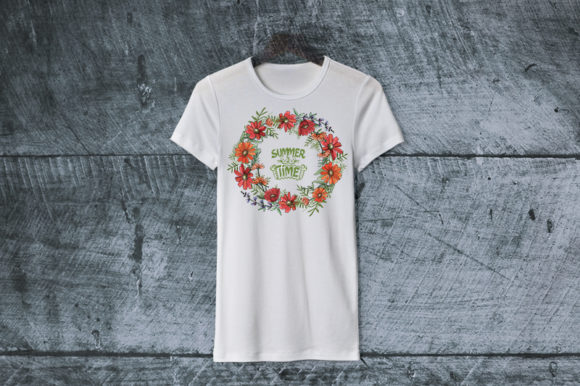
Floral Wreath with Gaillardia: Integrating Botanical Vectors into Professional Design Workflows
In the landscape of modern graphic design and digital publishing, the distinction between generic stock assets and curated, high-quality visual elements often determines the perceived value of a final product. The Floral Wreath with Gaillardia represents a specific niche within botanical illustration that bridges the gap between rustic charm and professional polish. For designers, marketers, and small business owners, this asset is not merely a decorative afterthought; it is a foundational component of visual identity systems, particularly for brands rooted in nature, craftsmanship, or seasonal events. Understanding how to leverage this specific vector round frame involves more than simple placement; it requires an understanding of file architecture, color theory integration, and strategic workflow implementation.
Defining the Asset in a Production Context
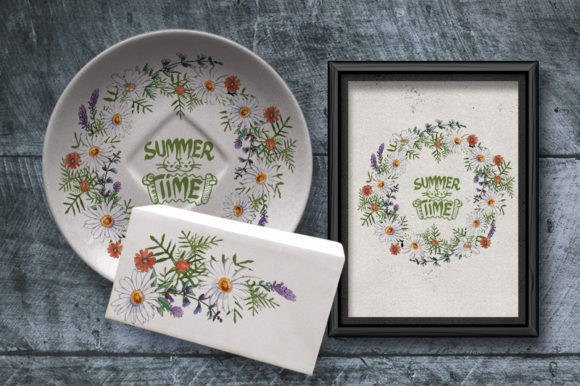
The Floral Wreath with Gaillardia is a specialized vector illustration featuring a detailed arrangement of garden and wildflowers, specifically highlighting the vibrant red and yellow tones of the Gaillardia (blanket flower) alongside the muted, textured greens of sage. Unlike raster-based clip art, this asset is constructed as a scalable vector graphic, making it indispensable for multi-format campaigns. The inclusion of a summer floral round frame provides immediate structural utility, serving as a container for typography, photography, or logo marks.
What distinguishes this particular configuration is the central composition featuring a letter logo placeholder flanked by two bunnies and an accordion. This whimsical yet structured center creates a focal point that balances the organic chaos of the surrounding flora. In a practical workflow, this pre-arranged hierarchy saves hours of layout time. Designers do not need to manually balance the visual weight of the wreath against the central text; the relationship has already been established by the illustrator. This allows creative professionals to focus on customization and brand alignment rather than structural composition.
Pre-Project Planning and Asset Selection
Before opening Adobe Illustrator or placing an image into a layout, effective integration begins with assessing technical compatibility and brand relevance. The package typically includes EPS files, vector files for Adobe Illustrator, and high-resolution 5000x5000 px PNGs with transparent backgrounds. Selecting the correct format at the outset prevents bottlenecks later in the production cycle.
- Vector Formats (EPS/AI): Essential for print materials like business cards, posters, and banners where infinite scalability is required. These formats allow for color manipulation to match specific Pantone or CMYK brand palettes.
- Raster Formats (PNG): Ideal for digital workflows, social media graphics, and web banners where file size and transparency are prioritized over editability. The 5000x5000 px resolution ensures crisp rendering on high-DPI displays and retina screens.
- Thematic Alignment: Verify that the Gaillardia and sage color profile complements existing brand guidelines. While the flowers offer warm energy, the sage provides a neutral grounding element that pairs well with earth tones, creams, and slate greys.
During the planning phase, consider the seasonality of the project. While labeled as a summer floral round frame, the presence of sage and the stylized nature of the vector art allow for transitional use into early autumn. This versatility extends the ROI of the asset across multiple quarterly campaigns without requiring new illustrations.
Execution: Customization and Technical Implementation
Once the asset is selected, the execution phase focuses on adaptation. A raw vector file should rarely be used "as is" in professional work. The goal is to make the Floral Wreath with Gaillardia feel bespoke to the specific project. Working within Adobe Illustrator, designers can isolate individual elements. The bunnies and accordion in the center, for example, can be hidden or recolored if they conflict with a corporate tone, leaving only the botanical frame and the letter space.
Color grading is a critical step in this process. Because the file is vector-based, global color changes can be applied instantly. If a wedding stationery suite requires a dusty rose palette instead of the default bright red, the Gaillardia petals can be adjusted using the Recolor Artwork tool without degrading quality. Similarly, the sage leaves can be shifted toward olive or eucalyptus tones to match physical paper stocks or fabric swatches. This level of control ensures consistency across disparate touchpoints, from a digital save-the-date to a printed menu card.
For users relying on the 5000x5000 px PNG, customization is more limited but still possible through layering. The transparent background allows the wreath to be placed over colored blocks, textured papers, or photographic backgrounds in software like Photoshop, Canva, or InDesign. When working at this resolution, always maintain aspect ratio to prevent distortion of the circular frame. Use smart objects in Photoshop to ensure that any scaling remains non-destructive.
Typography and Central Composition
The central area designed for a letter logo serves as a negative space anchor. When utilizing this space, typographic choices must respect the intricate details of the surrounding Gaillardia and sage. High-contrast serif fonts or clean sans-serifs typically perform best against the busy botanical texture. If inserting a full logo rather than a single letter, ensure adequate padding exists between the logo mark and the inner edge of the floral frame. Crowding this space reduces legibility and diminishes the elegance of the illustration. The bunnies and accordion act as visual bookends; if retaining them, align your central text baseline with their visual center to maintain equilibrium.
Application Across Media and Deliverables
The true utility of this asset lies in its cross-platform applicability. Different deliverables require different handling strategies to maximize impact and maintain quality standards.
Greeting Cards and Stationery
For greeting cards, the Floral Wreath with Gaillardia functions as a primary border or a central motif. When designing for print, ensure the vector file is set to CMYK color mode. The detailed nature of the wildflowers allows for specialty printing techniques; the sage leaves, for instance, are excellent candidates for spot UV coating or foil stamping to add tactile dimension. The 5000px PNG is sufficient for standard A7 or 5x7 card sizes at 300 DPI, providing a safety margin for bleed and trim.
Business Cards and Brand Identity
In business card design, scale and simplicity are paramount. The full wreath may be too dense for a 3.5x2 inch canvas. Consider extracting just the top arc of the summer floral round frame or using a simplified version of the Gaillardia cluster as a corner accent. The vector format allows you to delete unnecessary nodes and simplify paths for cleaner printing at small sizes. The central letter space is perfectly suited for monogram logos, creating a cohesive link between personal branding and botanical aesthetics.
Posters, Banners, and Large Format
Large format printing demands rigorous file preparation. Always use the native EPS or AI file for banners and posters. Rasterizing a 5000px image for a 4-foot banner will result in pixelation. With the vector source, the Floral Wreath with Gaillardia can be scaled to billboard size without loss of fidelity. For wide-format banners, consider stretching the circular frame into an oval or duplicating the floral elements to create a horizontal garland, adapting the round composition to rectangular dimensions while retaining the original artistic style.
Workflow Efficiency and File Organization
Integrating this asset smoothly into a team or freelance workflow requires disciplined organization. Because the package contains multiple formats, establishing a clear naming convention and folder structure is essential. Store master vector files separately from export-ready PNGs to prevent accidental overwrites. When collaborating with clients or other designers, provide the PNG for mockups and approvals, reserving the editable vector file for final production. This protects the integrity of the source asset and streamlines the feedback loop.
Consider creating a library of pre-customized variations. After adjusting the colors of the Gaillardia and sage to match a specific brand, save these versions as distinct assets. Over time, this builds a proprietary resource library that accelerates future projects. For agencies managing multiple accounts, tagging these files with metadata (e.g., "summer," "botanical," "wedding," "vector") ensures they remain discoverable in digital asset management systems.
Quality Control and Final Output Verification
Before finalizing any project featuring the Floral Wreath with Gaillardia, conduct a thorough quality check. Inspect the vector paths for open endpoints or overlapping shapes that could cause printing errors. Verify that the transparent background on the PNG is truly clean, with no stray pixels or halos around the sage leaves. On screen, zoom to 100% to check for aliasing or compression artifacts.
For print projects, request a physical proof or a calibrated PDF soft proof. Colors on screen often differ significantly from ink on paper, especially with complex botanical gradients found in Gaillardia petals. Ensure the sage green reproduces accurately, as greens are notoriously difficult to calibrate across devices. By treating this floral asset with the same technical rigor as custom typography or photography, designers elevate it from mere decoration to a professional-grade design element that enhances communication and aesthetic value.