Maximizing Design Versatility with Floral Single Vector Artwork
In the evolving landscape of digital and print design, the demand for high-quality, scalable botanical assets has never been higher. Whether you are a professional graphic designer creating wedding stationery, an educator developing biology curriculum materials, or a small business owner branding a new organic skincare line, the technical foundation of your imagery dictates the success of the final product. Utilizing Floral Single Vector Artwork provides a distinct advantage over raster-based alternatives by offering mathematical precision combined with organic aesthetic appeal. This specific category of digital asset bridges the gap between artistic expression and technical utility, ensuring that intricate petal details remain crisp whether printed on a business card or a billboard.
The Technical Advantage of the 12x12 Inch Artboard Standard
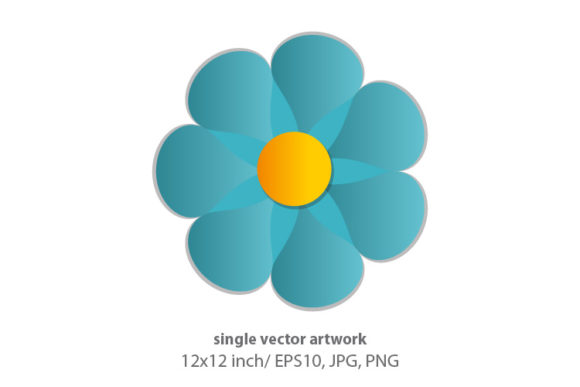
One of the most critical specifications in professional vector design is the artboard size. The 12x12 inch dimension serves as an industry-standard sweet spot for floral illustrations. This square format is not arbitrary; it aligns perfectly with modern printing standards, social media aspect ratios, and merchandise production requirements. When working with Floral Single Vector Artwork at this specific dimension, designers gain immediate compatibility with album covers, vinyl record sleeves, square throw pillows, and Instagram posts without requiring cropping or resizing that might compromise composition.
Furthermore, a 12x12 inch canvas provides sufficient negative space around the central floral motif. This breathing room is essential for designers who need to add typography, logos, or additional graphical elements later in the workflow. Unlike tightly cropped assets that force the user to work within restrictive boundaries, this standardized sizing allows for flexible layout adjustments. For researchers and educators, this consistent sizing also aids in creating uniform presentation slides and handouts, maintaining visual consistency across diverse educational materials.
Resolution and Color Fidelity in Digital Botanical Assets
While vectors are inherently resolution-independent, the accompanying raster exports included in comprehensive asset packages play a vital role in cross-platform compatibility. A specification of 300 dpi RGB color palette ensures that the artwork meets professional print standards while retaining the vibrancy required for digital screens. RGB (Red, Green, Blue) is the native color mode for monitors and mobile devices, offering a wider gamut than CMYK for on-screen viewing. When these files are exported at 300 dpi, they serve as high-fidelity proofs or ready-to-use assets for web designers who may not have access to vector editing software.
For hobbyists and creators using platforms like Canva or Procreate, having a 300 dpi JPG version of the floral artwork means they can import a high-quality base image without needing to master Adobe Illustrator. This democratizes access to professional-grade botanical art. Simultaneously, the RGB profile ensures that colors seen on screen match the intended digital output, reducing the guesswork involved in color correction for web-based projects. The inclusion of high-resolution raster versions alongside the source vector file creates a hybrid workflow that accommodates both advanced professionals and casual users.
Navigating File Formats: EPS, JPG, and Transparent PNG
A professional digital asset package is defined by its versatility. The inclusion of multiple file types within a single Zip archive addresses the varied needs of different stakeholders. Understanding when and how to use each format is key to maximizing the value of Floral Single Vector Artwork.
- EPS Version 10: This is the cornerstone of the package. Encapsulated PostScript (EPS) version 10 is chosen specifically for its broad backward compatibility. While newer AI formats exist, EPS v10 opens reliably in older versions of Illustrator, CorelDRAW, Inkscape, and Affinity Designer. It preserves all anchor points, curves, and layers, allowing for infinite scaling and complete editability. This format is non-negotiable for professionals who need to recolor flowers, adjust stem thickness, or isolate individual petals.
- JPG 300dpi: The Joint Photographic Experts Group format serves as the universal preview and quick-use file. Flattened and compressed efficiently, it is ideal for mood boards, client presentations, and rapid prototyping. Because it lacks transparency, it is best used when the floral element is intended to be the primary focal point against a solid background or when file size constraints are strict.
- PNG 300dpi Transparent Background: Perhaps the most immediately useful format for non-designers, the transparent PNG allows for instant layering. Educators can place a botanical illustration over a textbook page without obscuring text; e-commerce store owners can overlay florals onto product photography; and crafters can use them in digital scrapbooking without tedious masking. The 300 dpi resolution ensures that even when used in print projects, the edges remain sharp and free of pixelation artifacts.
Practical Applications Across Diverse Industries
The utility of standardized floral vector art extends far beyond traditional graphic design. By analyzing real-world use cases, we can better understand why specific technical parameters matter to different audiences.
Commercial Branding and Packaging: Business owners in the cosmetics, food, and beverage sectors frequently utilize botanical imagery to convey natural ingredients and sustainability. The ability to scale Floral Single Vector Artwork from a tiny ingredient label to a large storefront banner without losing detail is a cost-saving measure. Instead of commissioning separate illustrations for different sizes, a single vector asset handles the entire brand ecosystem. The 12x12 inch artboard fits standard packaging dielines, streamlining the prepress process.
Education and Scientific Research: Accuracy and clarity are paramount in educational settings. Researchers and teachers require illustrations that are stylized enough to be engaging but detailed enough to be informative. Vector artwork allows for the simplification of complex botanical structures without sacrificing anatomical correctness. The transparent PNG format is particularly valuable here, enabling the integration of floral diagrams into worksheets, slide decks, and interactive learning modules seamlessly. The RGB color profile ensures these materials look vibrant on tablets and smartboards used in modern classrooms.
Crafting and Hobbyist Communities: The maker community relies heavily on digital assets for physical production. Cricut and Silhouette users, for example, depend on clean vector paths for cutting machines. An EPS file provides the exact cut lines needed for vinyl decals, paper flowers, and fabric appliqués. Meanwhile, the high-resolution PNG serves as a perfect template for sublimation printing on mugs, tumblers, and apparel. The 12x12 inch size corresponds directly to standard cutting mat dimensions, minimizing material waste and setup time.
Best Practices for Workflow Integration
Acquiring high-quality assets is only the first step; integrating them effectively into a workflow requires adherence to best practices. When working with Floral Single Vector Artwork, organization and color management should be prioritized to maintain efficiency.
First, always retain the original Zip file structure. Unzipping assets into a chaotic folder system leads to lost source files and version control issues. Create a dedicated asset library with clear naming conventions. Second, when editing the EPS file, save your modified versions separately rather than overwriting the master file. This preserves the integrity of the original artwork for future projects. Third, be mindful of color profiles during export. While the source is RGB, commercial printers often require CMYK. Use professional software to convert color spaces accurately, checking for gamut warnings to prevent dull or shifted colors in the final print run.
For those using the transparent PNG files, ensure that your document resolution matches the asset's 300 dpi specification. Placing a 300 dpi image into a 72 dpi web document is acceptable, but placing it into a 600 dpi print document will result in upscaling and quality loss. Matching resolutions ensures optimal output quality. Additionally, when layering multiple floral elements, utilize blending modes and opacity adjustments to create depth and realism, leveraging the clean edges of the vector-derived PNG to avoid harsh transitions.
Evaluating Quality and Long-Term Value
Not all vector artwork is created equal. When selecting Floral Single Vector Artwork, discerning users should evaluate the construction of the vector paths themselves. High-quality vectors feature smooth bezier curves with minimal anchor points. Excessive nodes can cause jagged edges when scaled and make editing difficult. Clean topology indicates that the artwork was crafted by a skilled illustrator rather than auto-traced from a low-resolution image.
Consideration should also be given to the stylistic longevity of the artwork. Trends in floral design shift from hyper-realistic to minimalist line art periodically. Investing in versatile, classic botanical styles ensures the asset remains relevant across multiple projects and years. The technical specifications—12x12 inch artboard, 300 dpi exports, and multi-format delivery—are indicators of a professionally produced asset designed for long-term utility rather than disposable trend-chasing.
Ultimately, the intersection of artistic beauty and technical rigor defines the value of premium floral vectors. By understanding the implications of artboard size, resolution, color space, and file format, users across all skill levels can unlock the full potential of these assets. Whether facilitating a major rebrand, enhancing a scientific publication, or creating personalized gifts, the right technical foundation transforms simple decoration into a powerful communication tool.