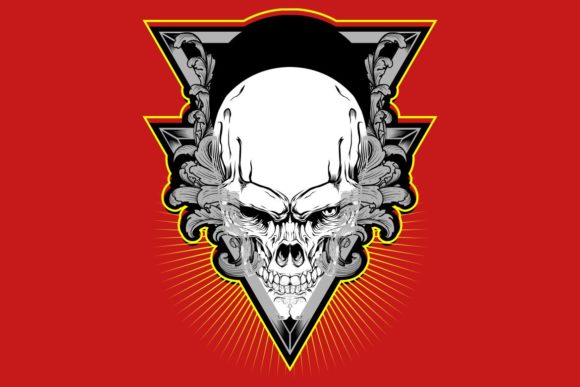
Skull Wit Floral Hand Drawing Vector: A Practical Guide to Usage and File Management
The intersection of macabre imagery and delicate botanical elements has created a lasting niche in graphic design, and the Skull Wit Floral Hand Drawing Vector sits squarely at the center of this aesthetic trend. This specific type of asset appeals to a broad spectrum of creators, from tattoo artists seeking fresh flash sheet inspiration to apparel designers building edgy streetwear collections. However, the appeal of a hand-drawn aesthetic often masks technical complexities that can derail a project if not managed correctly. Understanding the nuances of this vector asset is not just about appreciating the art; it is about ensuring the file serves its intended purpose without compromising quality or workflow efficiency.
Many users approach the Skull Wit Floral Hand Drawing Vector with the assumption that "vector" automatically equals "infinitely scalable perfection." While technically true for mathematical paths, hand-drawn vectors converted from traditional media often retain artifacts or structural issues that require attention. The value of this asset lies in its organic feel, but preserving that authenticity while maintaining professional production standards requires a deliberate approach to file handling, editing, and application.
Evaluating the EPS 1.100 File Structure
The most critical component of this package is the 1.100 eps vector file easy to edit. Experienced designers know that version numbers in EPS files are not merely administrative details; they dictate compatibility and feature support. A common mistake occurs when users attempt to open an EPS 1.100 file in outdated software or, conversely, save over it in a newer format without creating a backup, thereby losing specific legacy compatibility needed for print shops or embroidery digitizers.
Before making any edits, you must verify the integrity of the vector paths. Hand-drawn vectors are frequently created via image tracing, which can result in excessive anchor points, stray pixels, or unclosed paths. If you send a Skull Wit Floral Hand Drawing Vector directly to a vinyl cutter or screen printer without auditing these paths, you risk jagged cuts, ink bleed, or machine errors. Always use the "Simplify" or "Clean Up" function in your vector software to reduce node count while preserving the hand-drawn character. The goal is to optimize the geometry without sterilizing the artistic imperfection that makes the design desirable.
Another overlooked detail involves layer organization. In many downloadable assets, all elements are flattened onto a single layer. This severely limits usability. If you intend to recolor the florals independently from the skull or adjust the composition for different merchandise, you need separated elements. Take the time to ungroup and reorganize the layers immediately upon opening the file. Renaming layers logically (e.g., "Skull_Base," "Floral_Overlay," "Shading") saves hours of frustration later in the production pipeline.
Leveraging the High-Resolution JPEG Reference
The inclusion of a 2.jpeg high resolusition file is often dismissed by vector purists as unnecessary, but this is a strategic error. This raster image serves as more than just a preview; it is your primary color grading and texture reference. Vectors can sometimes appear too clean or flat compared to the original hand drawing. By keeping the high-resolution JPEG open alongside your workspace, you can match gradients, opacity levels, and texture overlays to ensure the vector output retains the soul of the original sketch.
Furthermore, the JPEG acts as a proofing tool. When preparing the Skull Wit Floral Hand Drawing Vector for web use or digital mockups, rendering the vector back to raster can introduce aliasing or color shifts. Comparing your exported file against the source JPEG helps identify discrepancies in line weight or contrast. For entrepreneurs creating product listings, using the provided high-resolution JPEG for initial concept validation can prevent costly sampling errors before committing to vector-based manufacturing.
Avoiding Licensing and Application Pitfalls
A frequent misunderstanding involves the scope of usage rights associated with hand-drawn vectors. Users often conflate "easy to edit" with "unrestricted commercial ownership." Just because you can manipulate the Skull Wit Floral Hand Drawing Vector does not mean you own the underlying intellectual property. Always review the specific license agreement attached to the download. Some licenses prohibit using the asset as a standalone logo or require attribution for certain commercial applications. Failing to clarify this can lead to takedown notices or legal disputes, particularly for small business owners selling on platforms like Etsy or Redbubble where IP enforcement is automated and strict.
Contextual appropriateness is another area where judgment calls matter. The "wit" in the title suggests a specific tone—perhaps humorous, ironic, or clever—rather than purely morbid. Misapplying this asset in a context that demands solemnity or, conversely, using it in a juvenile setting can create cognitive dissonance for the audience. Evaluate the semantic weight of the illustration against your brand voice. A floral skull might work perfectly for an alternative wedding stationer but could be inappropriate for a general healthcare provider, regardless of how beautifully drawn it is.
Technical Checks Before Final Output
To ensure professional results, implement a pre-flight checklist specifically tailored for hand-drawn vector assets:
- Color Mode Verification: Confirm whether the EPS is set to CMYK or RGB. Hand-drawn vectors sourced online are often RGB. Converting to CMYK for print can shift vibrant neon greens or deep blacks unexpectedly. Adjust colors manually after conversion rather than relying on automatic profiling.
- Stroke Expansion: Hand-drawn lines often rely on strokes rather than filled shapes. Always expand strokes to outlines before sending to production. Variable width strokes may render inconsistently across different RIP software or browser engines.
- Font Outlining: If the vector includes typography integrated with the floral skull motif, ensure all text is converted to curves. Missing fonts will cause substitution errors that ruin the hand-lettered aesthetic.
- Bleed and Safety Margins: Intricate floral details extending to the edge of the artboard will be trimmed during printing. Extend background elements beyond the trim line and keep critical skull details within the safety zone.
Neglecting these technical validations is the difference between a polished product and an amateur result. The Skull Wit Floral Hand Drawing Vector is a powerful tool, but it demands respect for the production process. By treating the EPS file as a starting point rather than a finished solution, and by utilizing the JPEG reference for quality control, you bridge the gap between digital convenience and artisanal quality.
Ultimately, success with this asset comes down to intentionality. Whether you are a freelancer delivering client work or a hobbyist exploring new styles, taking the extra steps to clean, organize, and validate your files ensures that the final output honors both the original artist’s vision and your own professional standards. The versatility of the Skull Wit Floral Hand Drawing Vector is immense, provided you navigate its technical and contextual requirements with care and precision.